
How to know if your flat foot is a problem?
Flat feet are very common, and for many people they never cause us a problem. The issue becomes more concerning when the flat foot starts causing pain, instability, or changes in how you walk and move. These changes can be a result of dysfunction in your Tibialis posterior tendon. This is the time to act and it might save you more pain down the road!
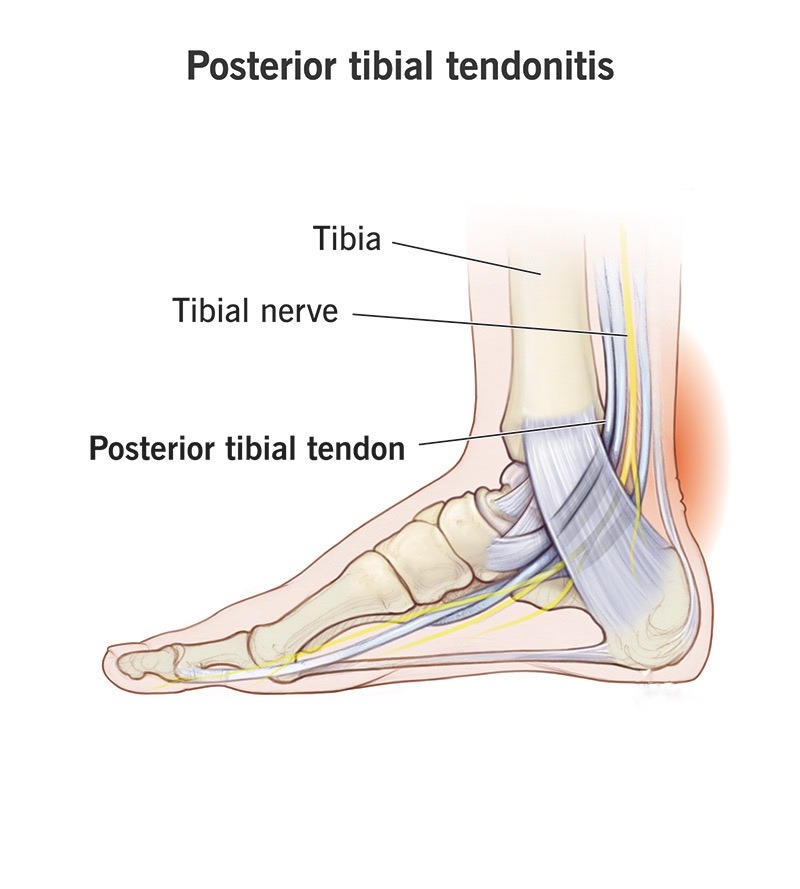
Signs that this flat foot might be more serious than you think
- Pain and noticeable swelling along the inside of the ankle near the ankle bone.
- Arch appears to be dropping and there is a noticeable difference between the feet
- Walking and standing on your feet for long periods of time cause you pain and fatigue.
- When viewed from behind, the heel may angle outward instead of staying straight.
- Excessive wear on the inside edge of shoes can indicate abnormal foot mechanics.
- Pain on the outside of the ankle – as the foot continues to flatten we start to see the lateral (outside) ankle bones collapse and push together
- The development of knee, hip or back pain – Flat feet can sometimes change overall alignment and contribute to pain higher up the kinetic chain.
Risk Factors for Posterior Tibial Tendonitis
- Prior surgeries or injuries that weakened your foot or ankle
- Participating in high-impact sports or over-training without good technique
- Spending many hours a day on your feet without supportive shoes
- Carrying excessive weight when you walk
- Having preexisting foot or walking abnormalities
How does tendonitis lead to dysfunction of the Posterior Tibial Tendon?
Tendonitis and tendinosis can become a vicious cycle. Chronic inflammation makes the tendon weaker and easier to injure. Repeated injury weakens it further and makes the inflammation continue.
As the tendon becomes less sufficient, other structures in your foot and ankle have to take up the slack. The extra stress on these structures makes them also begin to fail, shifting weight back to your tendon.
Acute posterior tibial tendonitis often improves with rest, time, and proper treatment. However, when the condition becomes chronic, it can begin a cycle of tendon degeneration that may progress into posterior tibial tendon dysfunction (PTTD).
As the posterior tibial tendon weakens, it can no longer properly support the arch of the foot. Over time, this may lead to a gradual collapse of the arch, commonly known as adult-acquired flatfoot or progressive collapsing foot deformity.
When the foot loses its normal arch structure, the ligaments and bones can slowly shift out of alignment. This change places abnormal stress on the joints of the foot and ankle, increasing the risk of pain, instability, deformity, and arthritis.
In advanced cases, the weakened tendon may partially or completely rupture. Because chronic degeneration reduces the tendon’s strength, even a minor injury can result in a full tear. A complete rupture typically requires surgical repair.
How is posterior tibial tendonitis and posterior tibial tendon dysfunction treated
- Early stages of tibial tendonitis respond well with conservative treatment using rest, ice and NSAIDS
- In more severe occasions immobilization of the foot is necessary using a cast boot before other conservative treatment can begin
- Conservative management for PTTD can include
- Physiotherapy
- Orthotic management through foot orthotics and ankle foot orthoses
- Supportive shoes
- Even with appropriate conservative management chronic tendonitis if your tendon has entered a state of dysfunction
When to seek a professional opinion
You should consider seeking a professional if many of these symptoms are present. It’s important for early intervention when trying to solve this problem and delay can lead to increased pain and immobility. Intervention can be as simple as footwear changes, strengthening exercises or even custom orthotics. Left unchecked painful flat foot may need more invasive solutions, so don’t hesitate, see an orthotist today!